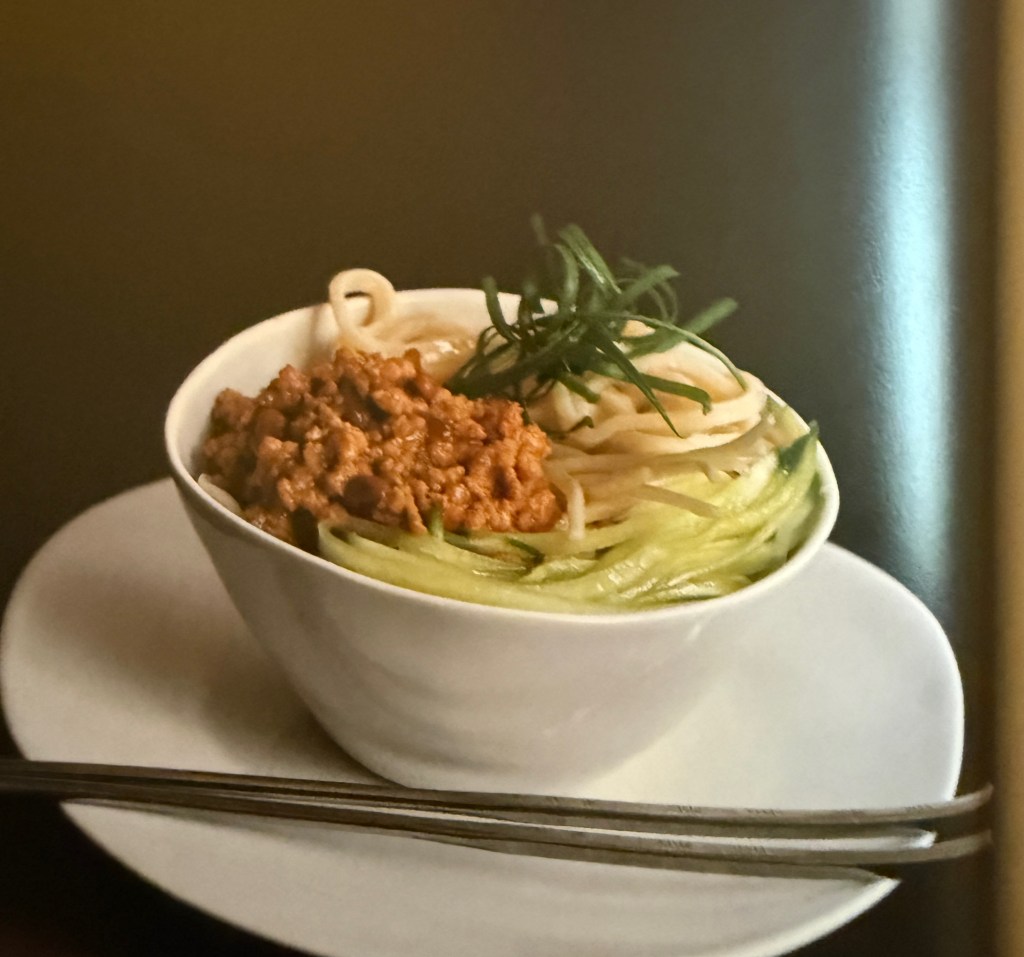
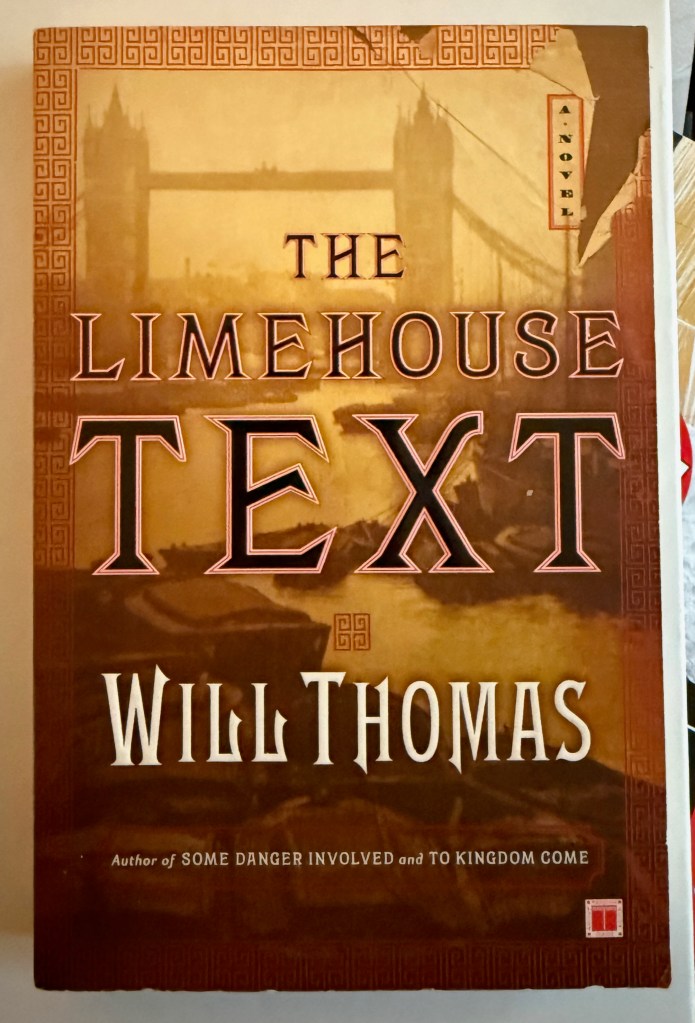
I first read about this soup in Will Thomas’s book, The Limehouse Text. The book called to me because, when in London, I lurked around the Limehouse area looking for old tools as well as any signs of Fu Manchu. AND it was about a missing book—a missing manuscript—which made it all an attractive combination.
The book mentioned a soup that rekindled a memory—I had something similar during Chinese New Year in New York in the 80s. The soup was called Across The Bridge Soup. There are many stories about this soup which I thought must be largely mythic or at least exaggerated. Much later a friend and China scholar confirmed the soup was a very real thing and I have since found several descriptions of it. In Will Thomas’s book, the soup is part of a massive banquet which lasted for hours with four or more soup broth courses with cooked meats, vegetables. dumplings, noodles, mushrooms and shellfish in various preparations such as crispy fried, steamed or marinated and flash cooked in an inferno wok. Bean curd, again variously prepared, mysterious meatballs as well as lotus root and other sprouts and shoots… What I observed were a lot of applications of wheat starch or wheat flour to bind or act as a crunchy coating… other starches played supporting roles as well.
The version I had was of a more modest scale but there were still two soups, very clear, extraordinarily good and an excellent variety of meats and veggies and dumplings. Some of the contents were so mysterious that I approached with curiosity. At the end of this meal, we had decided that nothing was too strange at all and the meal was extremely fine. Making it all the more extraordinary was the layer of very hot oil poured onto the soup—oil which holds the heat beautifully. It’s an amazing culinary development.
The story behind the soup tells of a craftsman or a scholar studying for exams who worked some distance from his house across a small stream. His wife would prepare a meal of soup but by the time it arrived it would be cold. Somehow inspired, she discovered that by pouring hot oil on top of the soup, she could walk the windy cold distance to—and across—the bridge, reaching the shop while the soup remained hot.
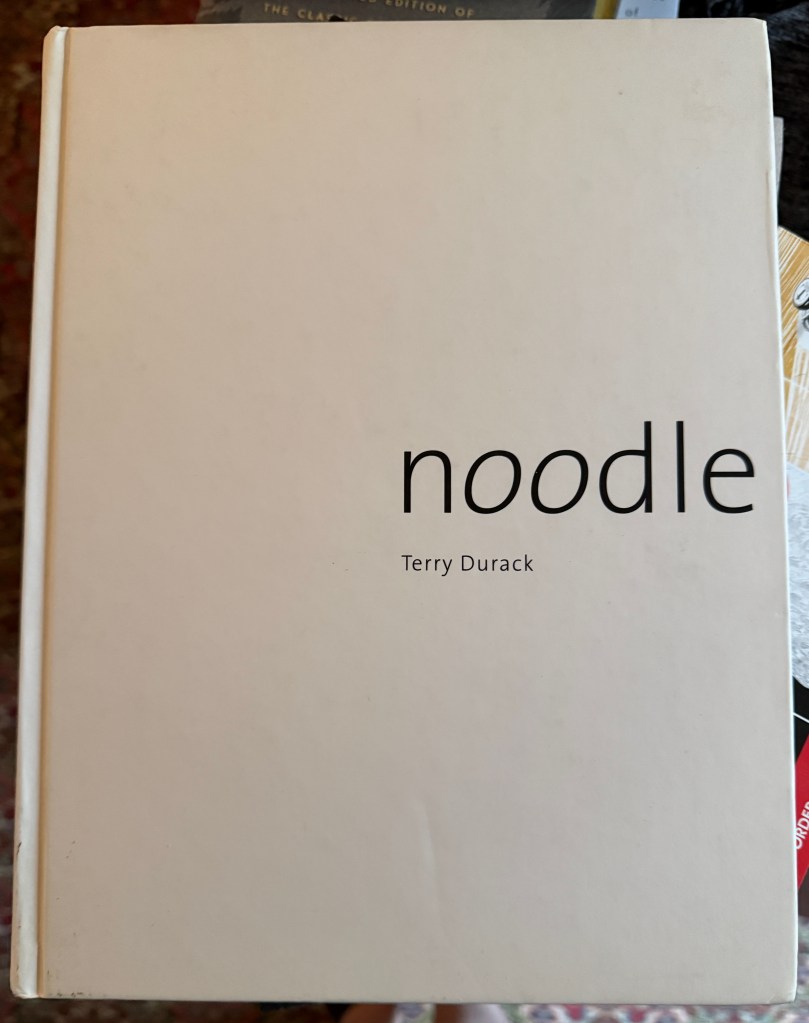
Of course, as we should expect, this is not the only tale told of the soup. Noodle by Terry Durak carries another version of the story. I once partook of a different version like a hot and sour soup with oil so spicy it will improve your eyesight. There may be as many versions as there are people making them.
One of the wonders of the kitchen is its fundamental connection with natural chemistry and physics. Here, as the oil keeps this soup hot it also improves the experience. But what might this have to do with fly fishing or the making of books? Where this soup focuses on oil, the kitchen and the bindery are inextricably connected by the miracle of natural starches.
Paste
I am constantly making paste for bookbinding. It’s a simple matter of four parts water to one part all-purpose flour, cake flour, or straight wheat starch. Of course, other starches also work extremely well such as the starch from pasta water. With the addition of a bit of glycerin, the working time of all these pastes can be slowed down for gilding or for use as medium for paper decoration.
A while back, I came upon a process credited to the Japanese for extremely soft dinner rolls using paste in the same precise ratio I use in the bindery. While it took time before I tried this out, I discovered it makes a tremendous difference with bread dough. The brain trust at King Arthur flour tells about why this works. The Chinese starch mix used in bread for extra softness and moisture retention is called Tangzhong (湯種), a cooked paste of flour and liquid (water or milk) that gelatinizes starches so they make bread fluffier and help it stay fresh longer—a process similar to the Japanese yudane method. Useful for all sorts of of breads, it can also help add flavors like seeds or herbs. By including them with the paste, flavors can be added as this is cooked.
For the bindery, a basic one-part paste material (wheat starch or flour) to four parts distilled water is cooked in a double boiler and makes enough for a couple of days. Since this is cooked, it will not ferment and become sourdough—it becomes compost… As an interesting aside, I have made a fermented wheat starch paste which, I’m reliably told, should be buried or put beneath the studio floorboards and aged for ten years. Every winter it is checked, mold is removed, and the mixture is topped up with fresh spring water. Paste and paper seal it up until next year. When it is finally ready, it makes for a near invisible adhesive and leaves no brush marks. Of course, my first batch was eaten by squirrels…
Using Paste
Paste is a wonderful substance. It’s reversible, with properties that make it extremely useful.
One of them is that its most basic form will stick to paper, glass, metal, or even some plastics (for the time until it dries). Of paste’s many possibilities, one of my favorites is to cover metal book boards in paper. I like the irony of covering metal with something membranous and delicate. Paste is also required with gold—an inert element older than the earth and created inside of a star. Gold adheres very nicely to the edges of a book or to a window/door for the office of a film noir detective (cue damsel in distress).
As a medium for paper decoration, paste is unsurpassed. While many different forms of paste come from the starches in many plants, I live in an area where wheat is farmed on a massive scale. Thus, wheat and its forms are always my first choice. Paste+ pigment + polymer = the working mix.
Sometimes I begin with soft white wheat berries which are ground into a fine flour to which I add water and begin kneading up to an earlobe consistency… This beginning is not yet committed to the bindery as it might become noodles, crackers, flat or yeasted bread, or starch paste. I love this process and don’t employ it unless it seems ready to contribute to the overall essence of a project.
This ball of dough might weigh half a pound and I place it into a bowl then top with water. You may wait a while or knead it underwater to release the starch. For the bindery I am seeking the starch slurry at the bottom of the bowl. Once you see it, the gluten ball is removed and reserved for something tasty. (Its loaded with protein and fries up nicely—top with some oyster sauce.)
From the starch slurry I estimate the starch to water ratio—a bit tricky but you want something in the range of one part starch to four parts water—then cook it in a double boiler, observe, and adjust the water as it thickens. I love the resulting nearly transparent adhesive for paper and for paper repairs.
Another Lovely Use
In the early 70s I came upon David Thompson’s book, The Practice of Tempura Painting. This book is loaded for me. One of the most interesting ideas prepares panels or paper with a collagen/gesso mix on which I create the matrix of a painting using diluted ink. This builds tone, is contemplative and slow, and anchors one’s ideas.
Over the years I refined this process many times. My latest refinement prepares paper for drawing beginning with Arches Cover white which, after wet sanding and polishing, becomes a near edible surface of great reception for both mind and pen.
To do this, my paper is cut to the ratio required for the project then dampened, wrapped in plastic, and set aside while I make up a batch of paste. The amount I need depends on the surface prep I am doing. Generally, though, one 500 ml jar of paste easily prepares four sheets of paper. To the cooled paste I add either titanium white or orthodox whiting from the farm supply store (they have come to believe I whitewash a lot of barns).
The white pigment and paste should be a consistency like heavy cream which could also be used to prepare a panel. This working mixture is applied with a soft brush. When it is dry I take a cabinet scraper to any odd or high places. Finally, to polish the paper I sand using a small marble block—very flat and wrapped in wet or dry abrasive paper. I use a mist of water and when my finger finds the smoothness, I give it a wipe.
As I said, the surface this creates is so gorgeous it is nearly edible. I like to use it with sharpened dip pens and China or India ink. Corrections can be made with a sharp curved blade and repairs or cover-ups are easy with a second application.
The process is quite flexible as the mix may be thinned with several layers applied. It can also be troweled on to the paper or panel and sometimes I add in small amounts of pigment. This approach also works for silverpoint and, since this paste sticks to metal, leaf can be added.
I Can’t Leave Without Talking About Noodles for Lunch
Here is a way… Take a cup of flour—soft white or cake flour if you want an Asian feel or a hard white for something more Italian. Of course, although this works well for me, there are many methods of making the beloved noodle.
To my cup of flour I add a pinch of salt and a pinch of baking soda—not the regulation alkaline salt but the one in everyone’s pantry. Mix together and gently add water until the dough is right… I like mine to feel like warm modeling clay or like tortilla dough. (It is all a sense of of touch.) When satisfied with the mix, knead then bag or bowl it for a while (hour minimum and or refrigerate until you are ready). From there, my noodles are simple—dust a work surface, roll the dough as thin as I can, knife into lengths and dust it with rice flour. Hang to dry is good or just dry on the working surface. Of course, don’t let the strands cross (just as crossing the beams is dangerous, no good will come of it).
That’s it. These noodles should have a nice chew and be slightly yellow. Cook ‘em up and dowse them with whatever pleases. This is easy and fun and I make it up while the coffee is brewing.
The amazing thing is how versatile starches are from noodles to all the versions of paste.
As usual, giant gratitude to the team for making this cogent…
Copyright 2026 — Timothy C. Ely — All Rights Reserved
 A Planetary Collage - Timothy C. Ely
Delicious article. E
LikeLike